
September 16, 2026
This week, the U.S. Environmental Protection Agency finalized the repeal of most of the federal greenhouse gas requirements adopted for fossil fuel-fired power plants in 2024. At the same time, EPA proposed eliminating the remaining federal greenhouse gas standards for the power sector.
This is deeply disappointing. It is not a step in the right direction for our country, our climate or Utah.
At Breathe Utah, we understand that energy policy must account for reliability, affordability and the realities facing utilities and communities. Utah needs dependable electricity, and transitions within the power sector cannot happen overnight. But reliability and responsible pollution reduction are not mutually exclusive. We should be working toward practical, achievable standards that provide regulatory certainty, encourage innovation and steadily reduce emissions. Abandoning federal safeguards altogether does not accomplish that.
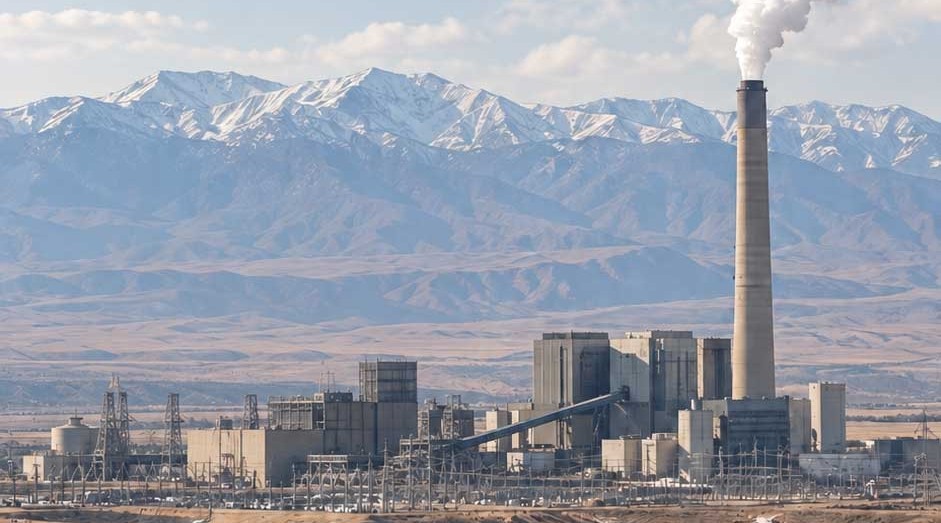
Power plants are among the nation’s largest sources of greenhouse gas emissions. EPA’s decision removes most of the 2024 carbon pollution standards and raises an even larger question through its new proposal: whether the agency should regulate greenhouse gas emissions from power plants at all.
That would be a significant retreat from decades of federal climate policy at precisely the time the country needs a clear, durable path forward.
Why This Matters in Utah
National decisions like this have particular consequences for Utah.
Our state continues to rely heavily on fossil fuels for electricity generation while also experiencing the effects of a warmer and drier climate. Utahns are already confronting longer and more severe wildfire seasons, drought, pressure on the Colorado River and Great Salt Lake, and periods of unhealthy air made worse by wildfire smoke and extreme heat.
Does This Affect Utah's Local Air Quality?
Not directly, at least not in the same way that vehicle exhaust, wood smoke and other local emissions contribute to winter inversions along the Wasatch Front. This EPA action addresses carbon dioxide, not the nitrogen oxides, sulfur dioxide and particulate matter that directly affect local air quality, contribute to ozone and PM2.5 formation, and impair visibility. Existing limits on those traditional air pollutants are not automatically eliminated by this decision. However, the rollback could still have indirect consequences. If it results in fossil fuel power plants operating more often or remaining open longer, those facilities may continue emitting pollutants that affect nearby communities and travel across state lines. Utah power plant emissions also contribute to regional haze, which can reduce visibility in national parks and other protected landscapes throughout Utah and the broader Colorado Plateau. So, while this rollback is primarily a climate concern rather than an immediate Wasatch Front inversion issue, the climate and air quality impacts of our energy choices cannot be completely separated.
Utah also needs consistency. Utilities, businesses and communities make investments that last for decades. Repeatedly reversing national policy creates uncertainty instead of the stable regulatory environment needed to plan for reliable, affordable and cleaner energy.
We recognize that the 2024 standards raised legitimate questions about cost, available technology and implementation. Those questions deserved careful consideration and, where necessary, workable revisions. They did not require the federal government to walk away from regulating power-sector greenhouse gas emissions.
The better course is neither an abrupt transition that ignores reliability nor an indefinite commitment to older, higher-polluting technology. It is a responsible transition that uses innovation, efficiency and Utah’s diverse energy resources to reduce emissions while keeping power dependable and affordable.
What Can You Do?
Part of EPA’s latest action is final, but the proposal to eliminate the remaining greenhouse gas requirements must still go through a public process.
Utahns can:
- Submit a public comment to EPA once the proposal is published in the Federal Register. Comments do not need to be lengthy or technical. Explain why you believe the United States should continue making reasonable progress toward reducing power-sector emissions while protecting reliability and affordability.
- Contact Utah’s congressional delegation and state leaders. Ask them to support practical policies that reduce pollution, provide regulatory certainty and invest in a reliable, cleaner energy system.
- Reduce energy waste at home or work. Weatherization, efficient appliances, smart thermostats and other efficiency measures can lower emissions and utility bills.
- Participate in state and local energy decisions. Federal rollbacks make thoughtful action by states, utilities and communities even more important.
- Stay informed and support organizations working for pragmatic, science-based air quality solutions.Utah cannot solve a global problem alone. But that is not a reason to stop making progress. It is a reason for federal, state and local leaders to each do their part.
Breathe Utah will continue advocating for practical solutions that protect public health, support a reliable energy system and move Utah toward a cleaner future. Rolling back federal power plant standards moves us in the opposite direction.